
Getting Started in TT Scale Model Railways
Many of you will at least have heard of model railways, otherwise you wouldn’t be here! Whether you are looking to start on your model railway journey or revitalise a hobby from days gone by, this article has you covered if you are looking at starting a TT Scale model railway. If TT Scale isn’t what you are looking for, find out about getting started in railway modelling in other scales. If it is, read on!
Many childhoods have been spent building a model railway, traditionally with an elder in the family promoting the interest, resulting in a layout on a big board placed on the dining room table and packed away afterwards. If you were lucky, a permanent space was available, such as a section of a bedroom or in the loft, or if you were very lucky, the holy grail of a spare room was available!
Why Choose TT Scale?
In yesteryear, there were many big names in the model railway world, such as Bassett-Lowke, Tri-ang, Wren, and Mainline. Although many have been surpassed or merged with other companies, the name Hornby has survived and become synonymous with model railways. In recent years, the company has returned to TT Scale with other manufacturers following suit to help reinvent the scale for British Railway Modelling in the modern age.
Before this resurgence, the two main scales for railway modelling were OO and N Scale, with a third, O Scale, also making a comeback in recent years. OO Scale has one benefit over any other, and that is the availability. Many manufacturers produce items in OO Scale, with some of the bigger companies also offering introductions to model railways for the younger generations in the guise of Junior ranges, making this an appealing scale to start in. One of the biggest downsides of this scale is that you need a fair-sized area to be able to build a realistic layout.
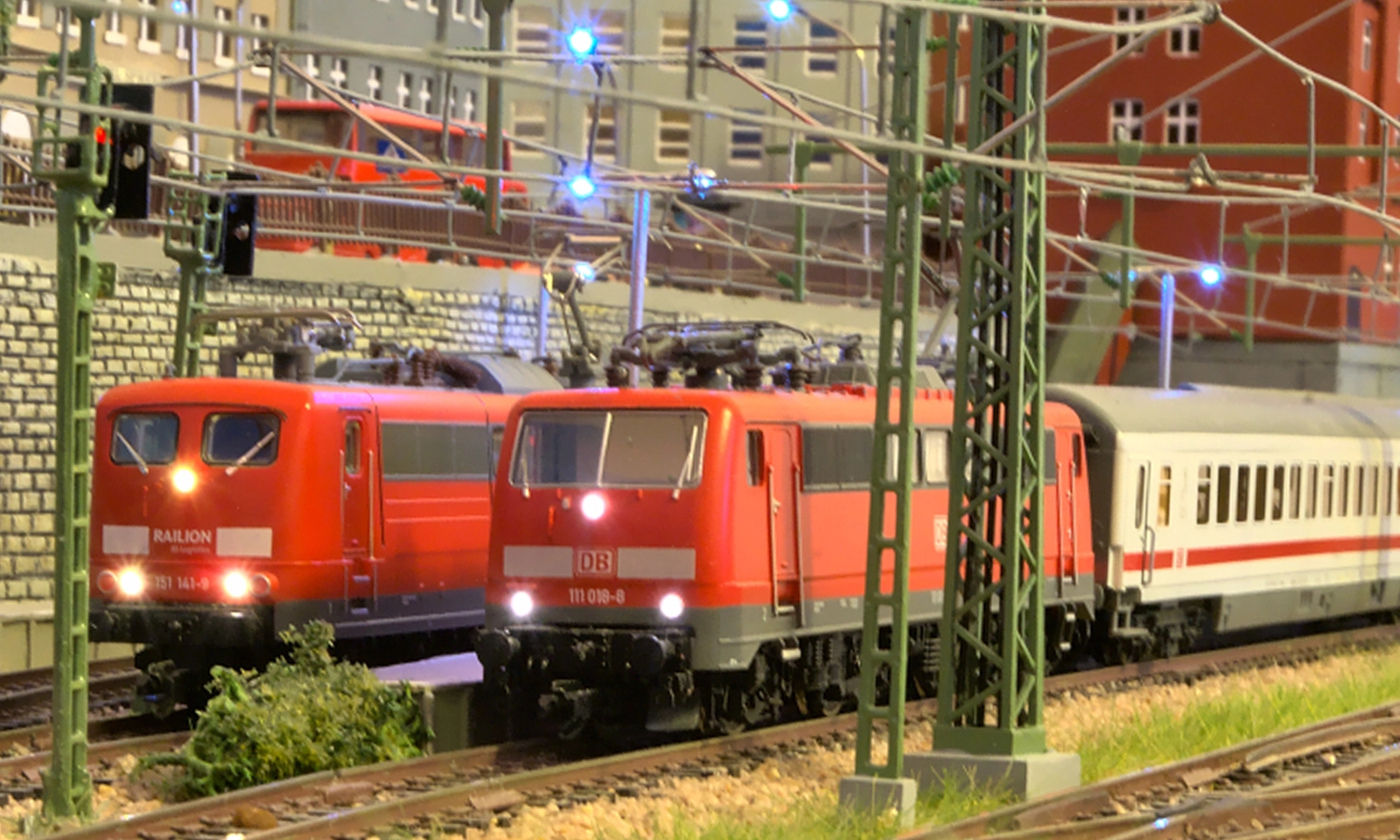
TT-Scale can offer a detailed model railway without taking up to much space
N Scale has always been an attractive option for those with less space or wanting to model larger stations and railways. It is half the size of OO Scale and still has a significant presence in the market. Being this much smaller, however, makes the scale mode delicate and can be seen as a bit too small to work with, especially for those starting out. So, what’s the answer? TT Scale! Halfway between the two, it offers modellers the chance to create a detailed landscape whilst still not occupying all the house's space, for a deeper look at the different Model Railway Scales see our article on Model Railway Scale vs Model Railway Gauge.
The Beginning of TT and TT3.
In yesteryear there were many big names in the world of model railway such as Bassett Lowke, Trianing, Wren, Mainline, and although many have either been surpassed or merged in with other companies, the name Hornby has become synonymous with model railways, and in recent years have returned to TT Scale along with other manufacturers to help reinvent the scale for British Railway Modelling for a modern audience, the history of the scale, however is a little more colourful.
The name TT is taken from the word ‘Tabletop’ and was produced to a standardised scale of 1:120. This scale sat perfectly in the market between HO and N scales and was the ideal size for tabletop modelling. TT first emerged in USA and was manufactured by Hai Joyce under the name H. P. Products. Previously an automotive designer, Joyce started promoting this new scale in 1946. By the time of its release, the line included kits of locomotives, coaches, and wagons, as well as track and accessories.
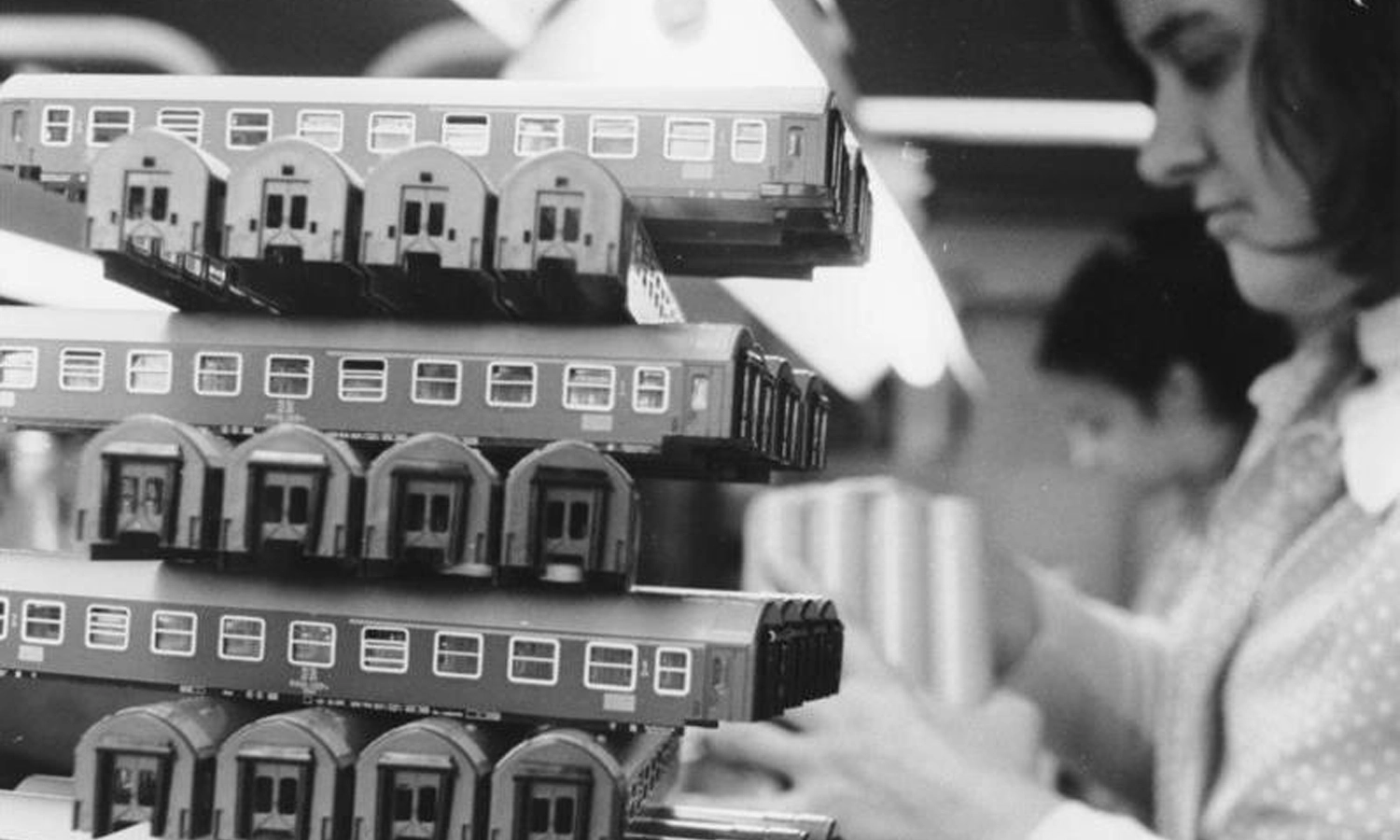
The Zeuke models became popular, and production volumes increased.
Jump forward to the 1950s, and the scale has started to take off. The range was offered at a lower price than many other scales available at the time, making it more affordable to everyone. Other American companies began manufacturing TT, with others in Europe taking up the scale by the end of the decade.
1957 saw Tri-ang launch their own range of locomotives based on British outline prototypes. These, however, suffered from the same issue as the larger OO Scale. Although manufacturing ability in the UK had improved since the introduction of the larger OO Scale, the UK were unable to produce motors small enough to fit into true-to-scale British locomotives. This led to the locomotives being enlarged to a scale of 1:101.6. The track, however, remained the same with a 12mm spacing, resulting in a new scale now referred to as TT3 and British TT.
The 1960s brought a jump in technological ability and thus a surge in the production of N Scale models. This increased the scales’ popularity, with it soon dwarfing TT Scale as it offered the ability to fit more in the same space. 1967 saw H. P. Products discontinue their TT range, with Tri-ang following suit with the discontinuation of British TT in 1968.
However, one of the German manufacturers, Zeuke, now known as Berliner-TT-Bahnen, was enjoying more success. Based in what was at the time East Germany, their range of TT products increased in this period, even to the point of almost becoming a contender to the larger HO scale. This success was built upon in the 1980s as they began exporting their products to West Germany, giving this market a cheaper entry to the model railway hobby.
With the unification of East and West Germany and the stabilisation of their economy, Berliner-TT-Bahnen began upgrading their models to higher standards. Sadly, the company soon ran into internal difficulties and was taken over by Tillig, another European model railway manufacturer.
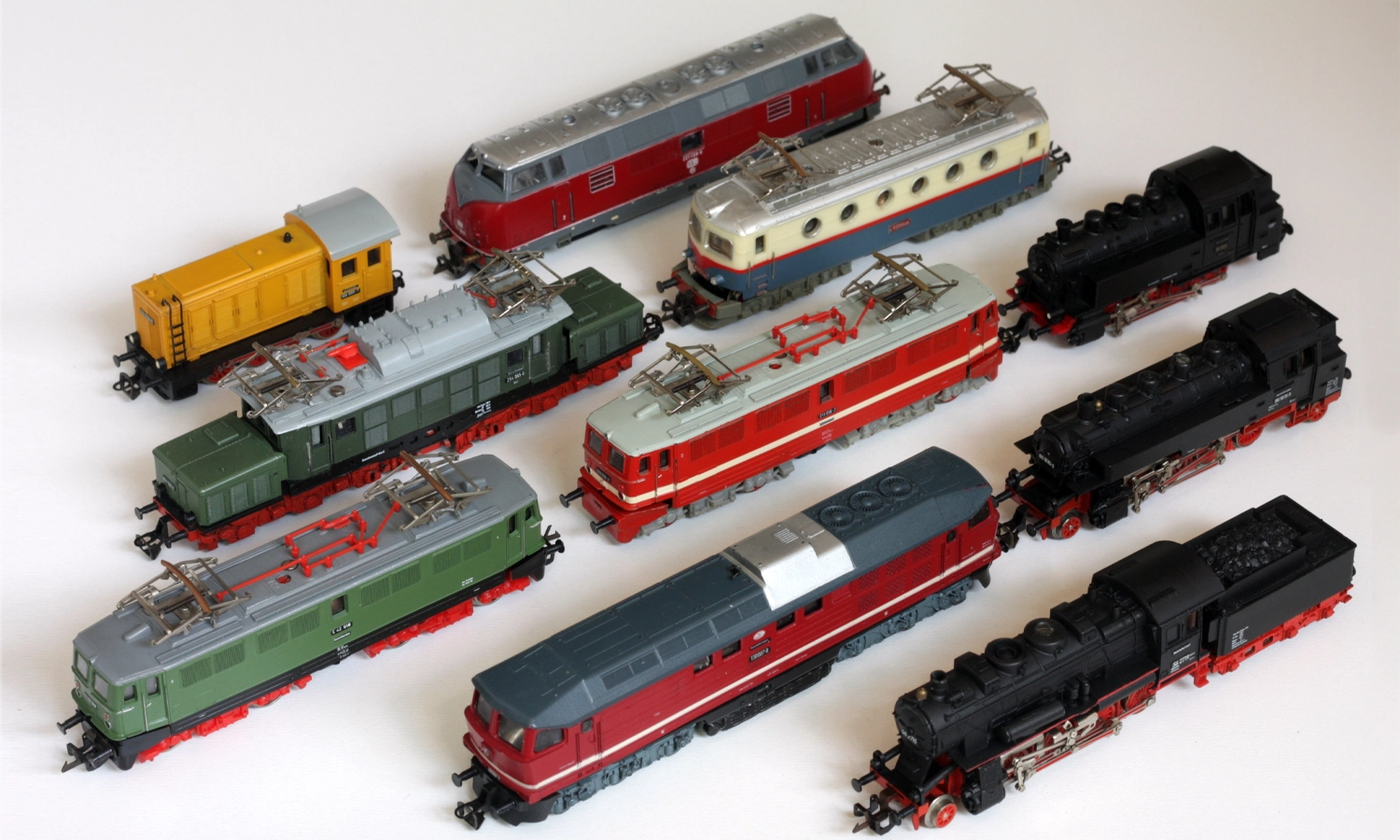
A selection of Berliner-TT-Bahnen locomotives that wouldn’t look out of place on a modern layout.
With this growing success in Europe, other manufacturers began looking at TT scale to vary their offerings. In the 1990s and 2000s, manufacturers like Kurhn made a start in the market, and bigger names such as Piko and Roco expanded to offer ready-to-run locomotives and rolling stock too.
Fast forward to 2022, and the scale made another leap to the mainstream, with Hornby announcing they would be resurrecting British TT, but this time, manufacturing the true 1:120 scale, Hornby’s TT:120 was born. This new iteration of TT for the British market has been designed so that it not only runs on the same track as the continental models, but the rolling stock connects without the need for coupling conversion. In the same year, Peco announced and released a range of track and building kits to complement the range. Gaugemaster released a selection of accessories to make building a detailed, realistic layout even more viable.
The appeal of expanding their offerings with TT has reached other European manufacturers too, with Arnold also producing a range of locomotives and rolling stock. Noch offers a range of scenic products alongside their general ranges of scatters and landscape material, and produces figures that complement the Preiser offerings. Viessmann offer a wide range of lighting as well as European signalling, too, and model vehicles are offered by the likes of both Herpa and Oxford.
So, you’ve had the history lesson, where do you start?
What Should Be Considered When Starting a TT Scale Layout?
In 2025, things have moved on considerably in model railways since the “Old Days”, and there are two significant choices that need to be made before you should even consider buying anything. These choices will underpin your model railway, and that is what you want to model and how you want to control your layout – is it by analogue or digital operation? There is no right or wrong answer to these questions, as it all comes down to personal preference.
What do you want to model?
Whatever your motive for wanting to start a model railway, such as an escape from modern life or as an outlet for some stifled creativity, building a model railway can be a fulfilling hobby. That said, it is always good to have an aim or plan to work towards, to allow you to avoid the pitfalls that an improvised project can cause. Planning is a lot of the fun of building a model railway for some modellers, and a good plan to work to will eliminate future frustrations.
Start by considering what it is you want to build a model of. Is it a prototypical or freelance line? Is it something that exists, or your perfect railway operating smoothly away from the negativities of life? Do you want to model a replica of a real place? Building your favourite place or railway is very exacting but incredibly rewarding. Do you want to capture the flavour and atmosphere of a geographical location or a period? Most layouts fall into this category, but you can also disregard any region or time period and build a layout where you can just run whatever you like. However, modelling a preserved railway can also be a good option here. Remember, it’s your railway and your rules.
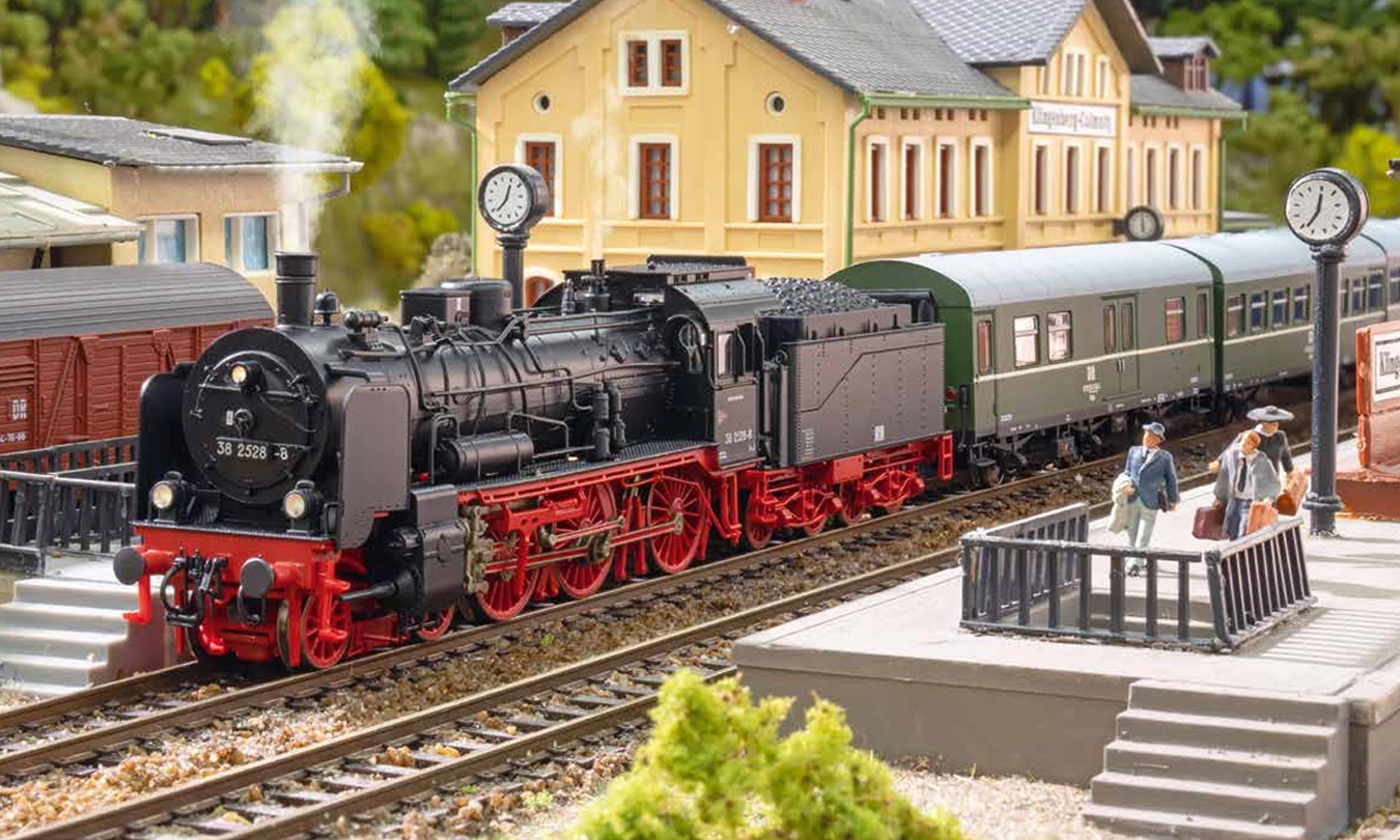
Whether you prefer British or Continental locos, the decision will aid the development of the layout
An option to get a feeling for where you might want to go is to visit a local model railway exhibition. Here, you will see model railways in a variety of gauges operated using both analogue and digital controls, and you’ll be able to pick the brains of those there too. Railway modellers are a friendly bunch and will usually freely share their advice and experiences, although don’t forget that because something works for them, it might not work for you and vice versa. Exhibitions are also a good place to find out about and join a model railway club. Such clubs allow you to socialise with like-minded people as you ‘play trains’ together, building lifelong friendships and model railways! Don’t dismiss visiting your local specialist dealer, whose experience in the hobby will be valuable to you moving forward and can help and guide you through all the products available.
If you live in a remote location or don’t have the time to commit to either visiting a show or joining a club, don’t panic. The model railway hobby is well supported by magazine companies such as Railway Modeller, Model Rail and Hornby magazines, which offer print and digital versions of their magazines, with some even hosting archives of online tips and tricks to get the most out of the hobby. Social media such as Facebook, Instagram, Reddit, and online forums such as RMWeb offer the ability to talk to other modellers and discuss projects, problems or ideas. YouTube is full of informative reviews, hints and tips to entertain and inform, as well as provide videos on the history of the railways and real locations.
Analogue or Digital Control for TT Scale?
For those unfamiliar with the terms, an analogue controller sends power directly to the rails and in very basic terms, the higher up you turn the dial on your controller, the more power is sent to the track, and the faster your trains will run. A change of direction is achieved with a basic switch. Generally speaking, you will be limited to one train per circuit and cannot control any additional functionality such as sound or lights. Accessories are usually controlled by a bank of switches or a mimic board. A recent innovation for analogue, however, is the wireless analogue control offered by Gaugemaster in their Infinity range. Previously, wireless control could only be achieved using a digital controller, but this new system not only manages this, but also simplifies accessory control whilst eliminating the need for a lot of associated wiring.
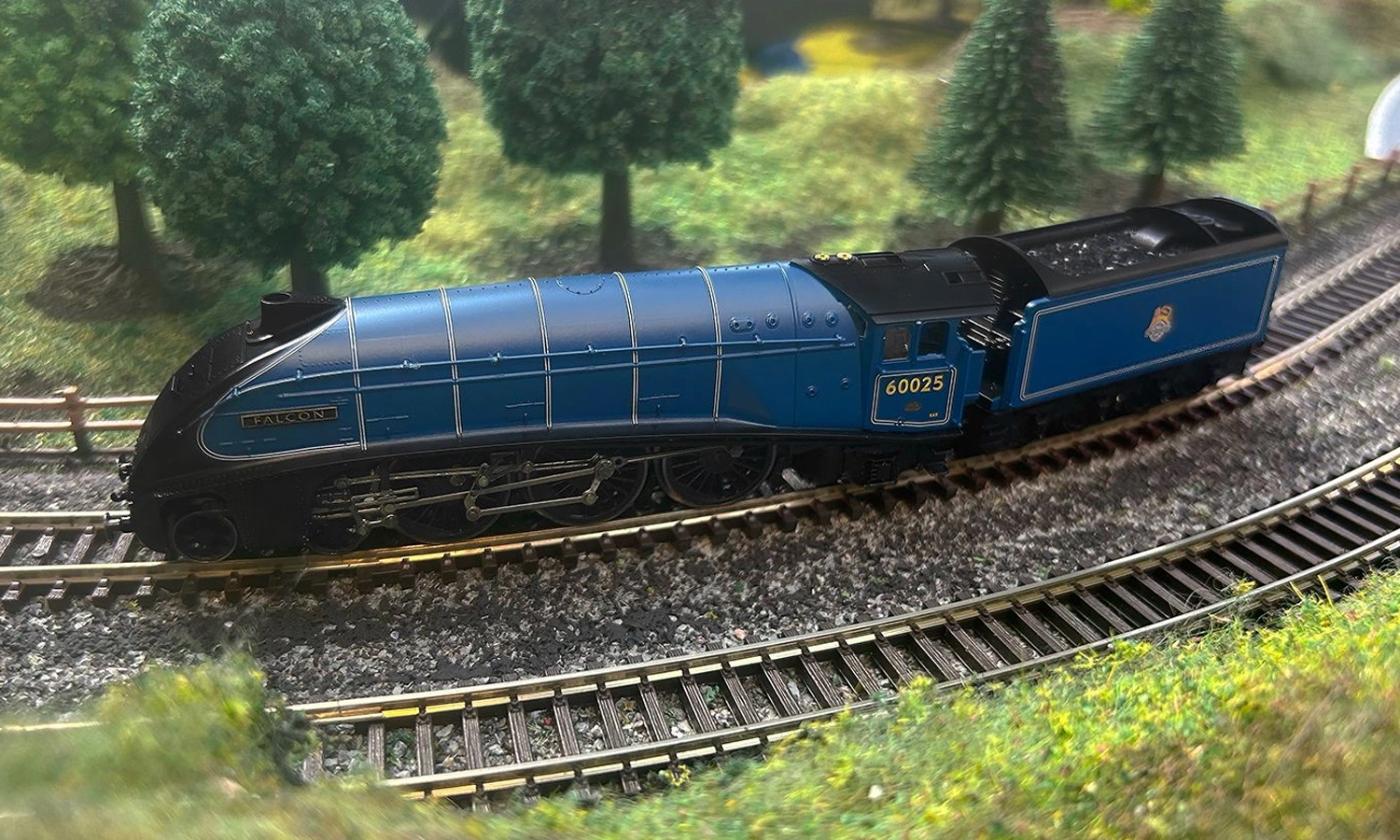
Hornby offers both Analogue and Digital fitted locomotives
Compared to analogue, digital control offers a much more realistic form of operation. Although seen as more complex by some, with the latest generation of controllers, digital control is as simple as operating a smartphone, and sometimes even easier! It is accepted that Digital model railways can be more expensive, but the trade-off is that it opens up many more possibilities, such as control of on-board sound, lighting and operational functions, as well as the ability to run multiple trains on the same track. With every one of your locomotives requiring a decoder on board (many manufacturers also offer locomotives already fitted with them), your digital controller will send commands to this decoder which operate the motor, lights and accessory functions for more interesting and realistic operation.
There are other pros and cons of analogue and digital operations, which we look at in our dedicated article on the Differences Between Analogue and Digital, designed to clarify the choice. Even then, don’t worry if you are unsure whether going digital is right for you; many locomotives and layouts can be converted later, but if that is your aim, there are things you can do to facilitate the later change.
Where To Put Your TT Scale Layout?
Determining where your layout will live is critical, as you’ll need to create the ideal environment for operation. In a perfect world, the spare room is ideal, but it can be an unpopular chice with fellow householders. You can mitigate this by building in functional storage under and above the railway or combine work stations with others to give them more space, or better still, include them in your hobby! Building model railways with family and friends can be just as fun and rewarding and much more harmonious than arguing over the space.
If a spare room isn’t an option, the loft can be extremely viable. You will need to consider access and mobility, plus insulation, as lofts can be very cold in the winter and very warm in the summer, and you will also need to be mindful of the structural integrity of your home. Those joists and beams are there for a reason! The garage is possibly the next best choice, but that means compromises for your vehicle and possibly security implications. A shed or summerhouse can also work, however the consideration of how you get power out there along with decent insulation and security are essential, as is ensuring that your wooden structure is completely watertight. Finally, don’t forget to consider where you will be operating the layout from – will the layout run around the perimeter of a room, and you operate from the middle where a hatch or lift-out section would be required, or will you operate from the side and need a bit of extra space there?
Do you want a ‘tail chaser’, ‘end-to-end’ or a ‘plank’?
Before you think we’ve lost our minds here, a ‘tailchaser’ is a commonly used phrase used to describe a layout mainly comprising circuits and is an ideal layout for someone who enjoys seeing trains go round and round, possibly at speed. You do need more space, but it’s the best way to model a main line model railway using analogue control, and is a good starting point if you start out by purchasing a starter set. An ‘end-to-end’ layout, as the name suggests, runs from one end to the other on a line, much like a branch line or can be used to simulate part of a larger line when combined with fiddle yards.
A ‘Plank’ is an end to end layout, usually constructed by modellers with limited space who can focus on intricate shunting and usually depicts goods yard, engine shed or locomotive depot this is an ideal layout for those with a large fleet of locomotives who would like to show most of them off at the same time. A digitally controlled layout in this style can yield spectacular results. Layout Planning and Design is an essential part of the design process and shouldn’t be an area that is overlooked. All these decisions can seem a lot to think about, but once considered, make your model railway journey a breeze.
Where to Begin with TT Scale Model Railways.
Once you have decided whether you will use analogue or digital, what you will model and where it will live, what do you purchase first? As with any scale, a starter set is the easiest way to get going as it contains everything you need to get a layout started - A controller, track, a locomotive, and usually some matching rolling stock, such as wagons or coaches.
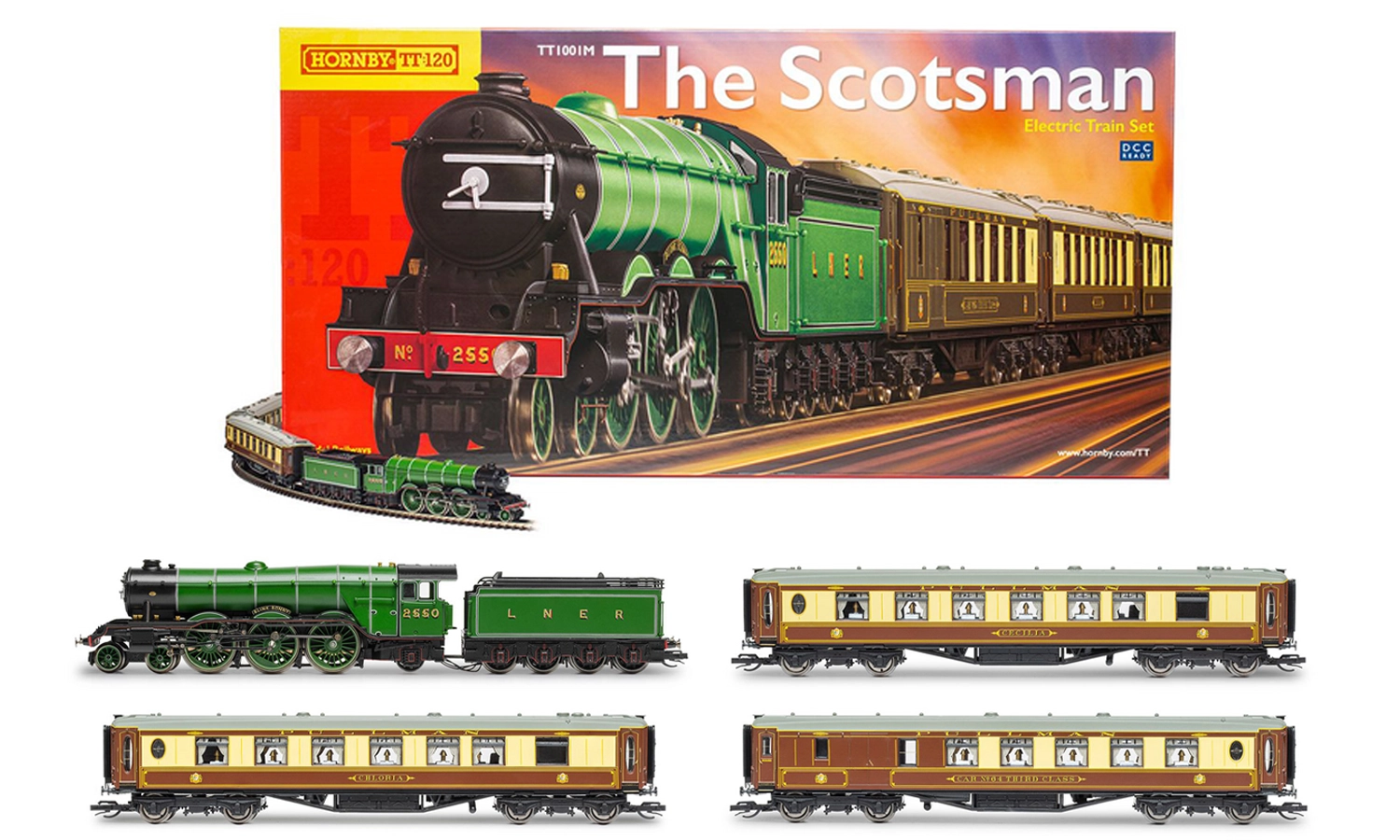
The famous Flying Scotsman forms part of a Hornby TT Scale Starter Set
With the origin of the name being tabletop, it is safe to assume many people will set this up on the dining room table and get running right away. Who wouldn’t want to get the trains running as soon as possible? Once a few hours of enjoying your new purchases have passed, thoughts may turn to what to do next, and that is where your imagination can really run wild.
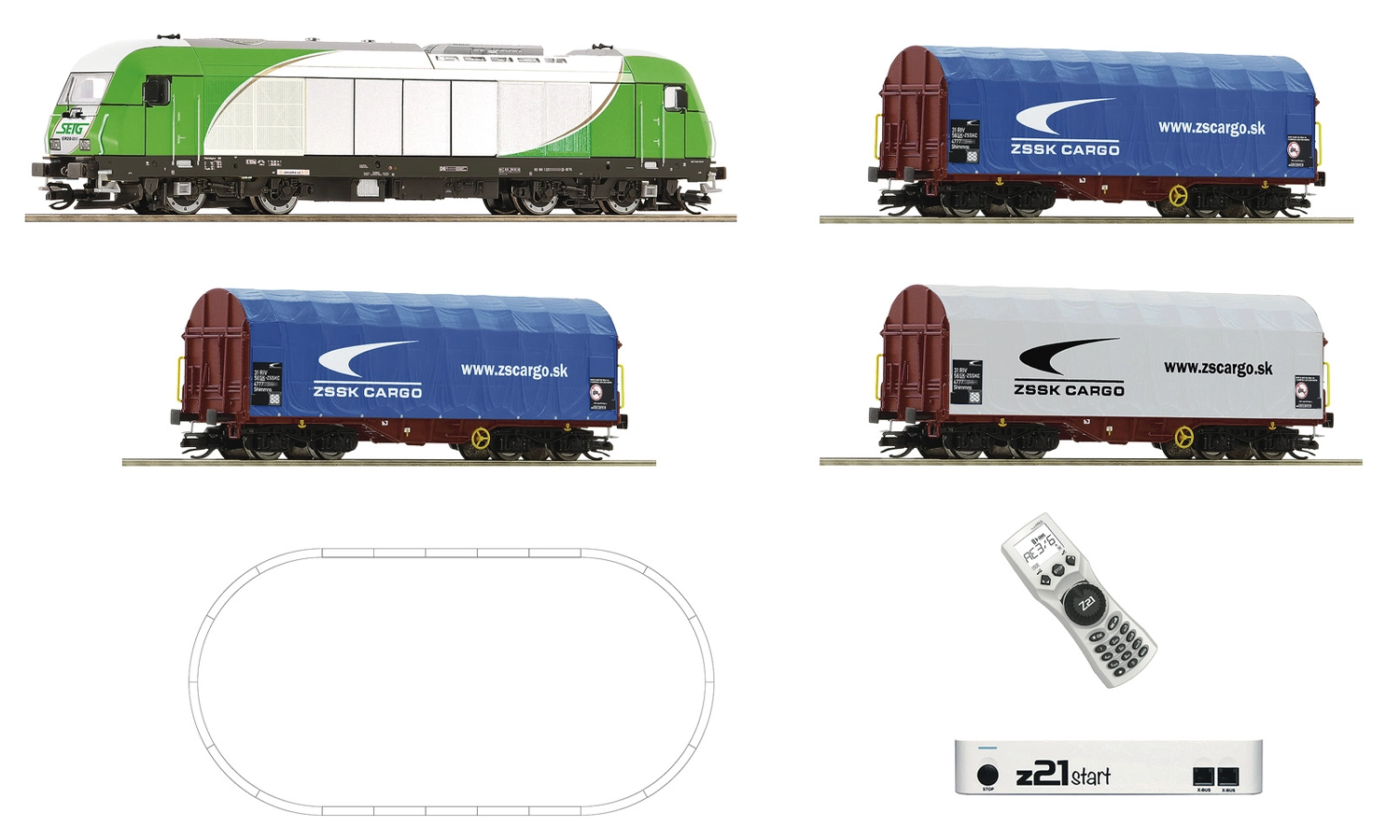
Roco also produce starter sets in their range, which include their Digital Z21 controller, but their range concentrates on track and rolling stock
The downside of any starter set across any scale, is that it usually contains a set section of components, some of which may not ultimately be wanted. For example, if you plan to do an end-to-end layout, starting with an oval of track may not be the best step forward. If this is the case, consider purchasing the parts you will use separately.
When consiodering purchasing items seperqatley, you will need three things to get up and running. The first is the track. Regardless of the track system you go for, it is best to stick to the same manufacturer throughout the project to maintain consistency in style and look. There are essentially two ‘types’ of model railway track: ‘Setrack’ and ‘Streamline’. ‘Setrack’ is sectional track sections made to set sizes and radii, whereas the ‘Streamline’ is built around a selection of pointwork and flexible track to allow custom surves and straits. There are benefits to each, and deciding which system is best is discussed in our Which Track System: Streamline or Setrack? article.
Where Next?
After the initial purchase, additional pieces will inevitably be wanted. TT Scale Track is available from a variety of suppliers such as Hornby, Peco and Roco, as well as Gaugemaster who also offer a wide range of control equipment, including analogue and digital controls, point motors and control as well as general layout wiring. This will give you the basics of setting up a basic working layout. If you are looking at building a permanent set-up then your next stage would be to build a baseboard. Our article on Building Baseboards is a good starting point for any layout base, and can be built upon to suit your needs.
Locomotives and Rolling Stock.
Once you have decided on what kind of layout you are modelling, this will lead you to what stock you require. Generally rolling stock refers to anything that runs on the rails, ie locomotives, coaches, wagons and maintenance vehicles, although locomotives are sometimes separated from this term. For British outline, you will find a range of rolling stock from both Hornby and Heljan, whereas Roco and Piko have the continental locomotives covered.
Scenery, Buildings and Accessories.
The scenery is the most essential part of turning the traditional idea of a train set into a detailed model railway. For scenic natural settings, starting with the ground cover can give daily instant results and allows quick mapping out of areas of a layout. This is then usually followed with the larger plants, bushes and trees. Many scenic products are available, with scatters, grasses and trees suitable for multiple scales. A small tree in O Scale is a large tree in N Scale! Don’t forget, trees can also mask scenic breaks at the end of a layout and changes in backscenes, too.
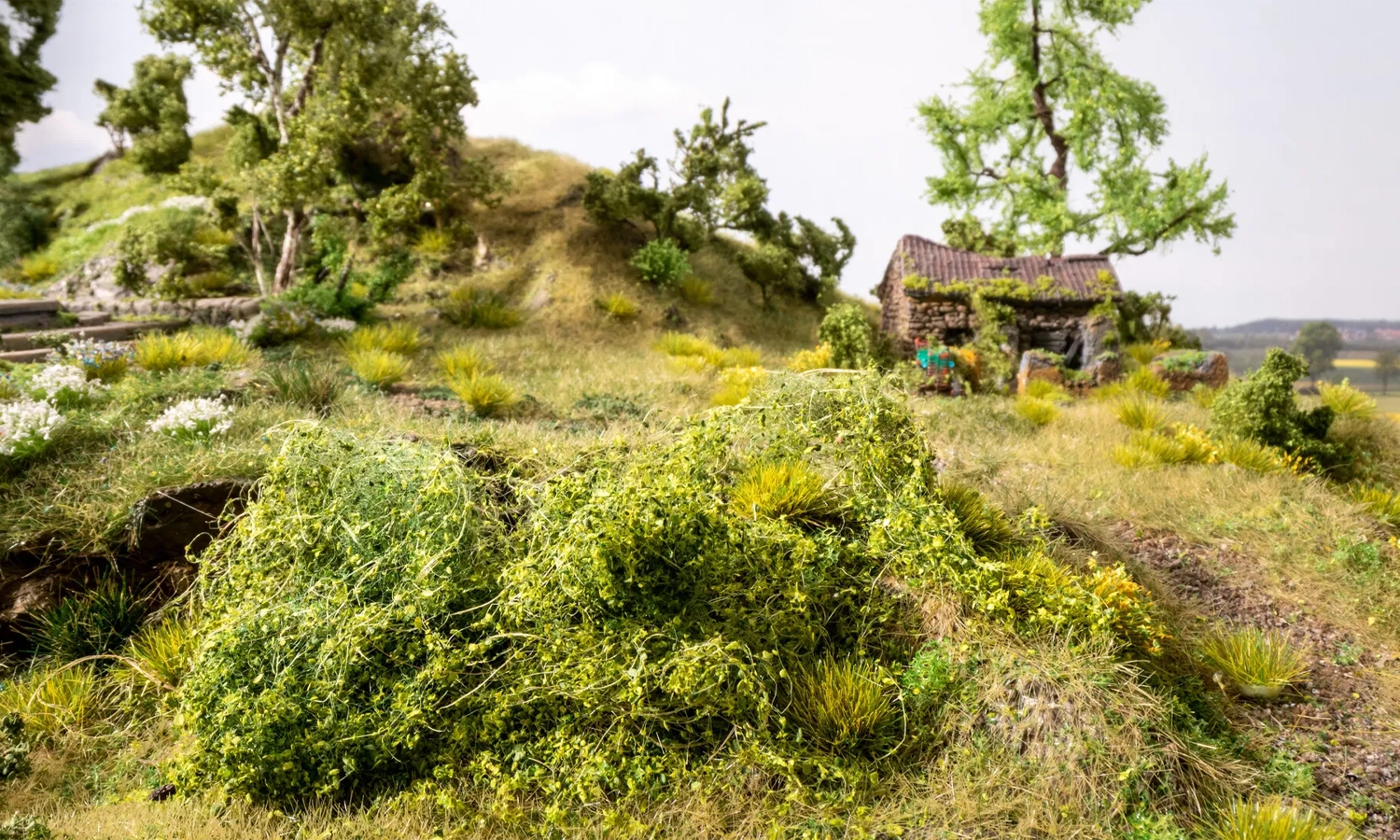
The Noch Profi Bushes can be used for multiple scales, making them ideal for TT Scale landscapes
For man-made infrastructure, there are a range of buildings and kits available, with ATD Models being the first to offer card kits in the scale. Any of the kits, either card or plastic, can be built as they are or modified to suit a host of locations. Other infrastructure, such as roads and embankments, are also available, with the likes of Noch and Faller adding to the offerings in this scale. Utilising products from different manufacturers from around the world adds more variety and individuality to any scene, which ultimately adds to the overall realism.
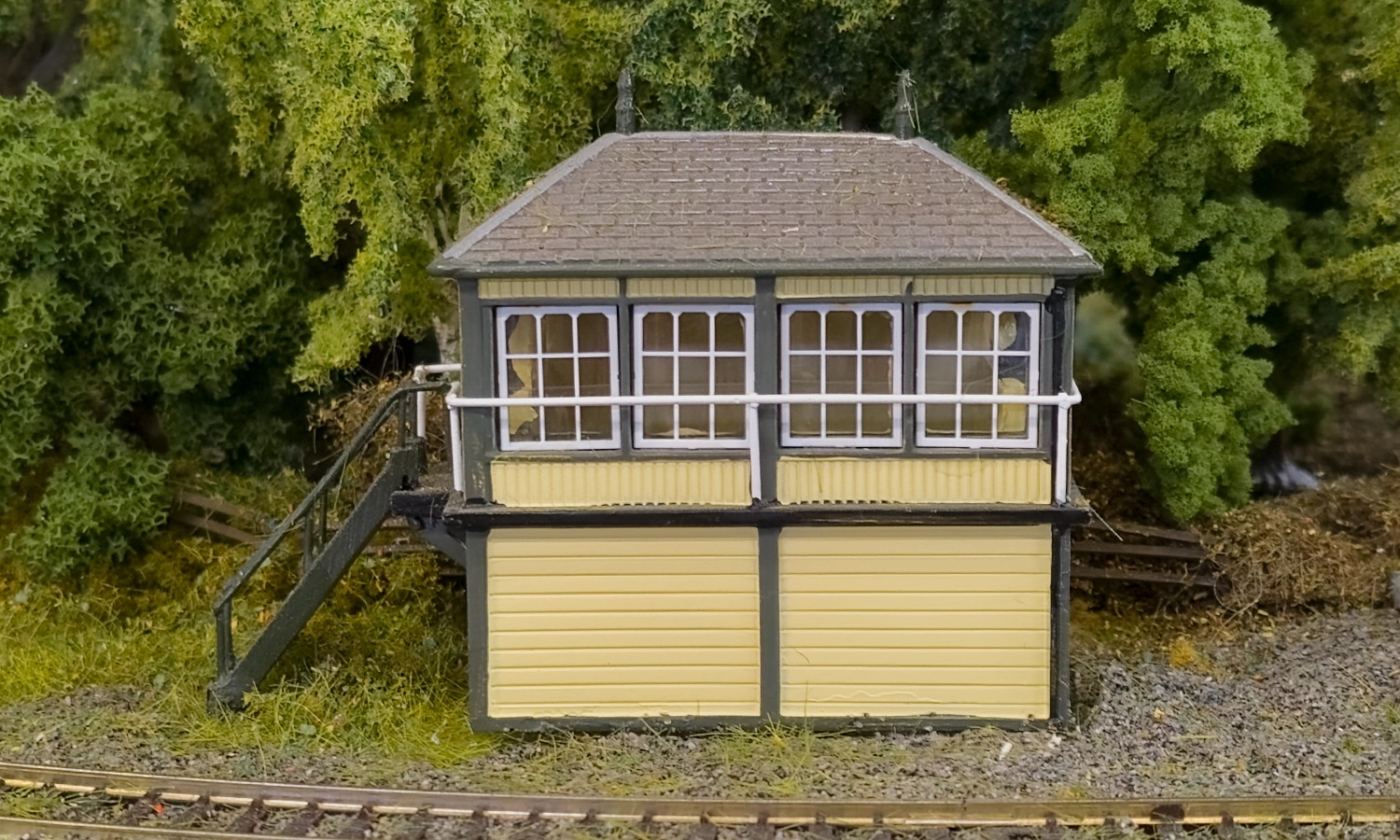
Just one of the ready-built resin buildings available from Hornby
Details such as figures, vehicles and accessories can be sourced from various manufacturers with more items being added all the time. The Gaugemaster range of accessories contains figures, vehicle kits and other familiar products to bring your layout to life, with Peco offering complementary products too.
Everything Else
While the range of items available is not as extensive as other scales, TT Scale offers the chance to build a uniquely interesting layout. We stock a range of scratchbuilding materials and the tools to help you create those items not yet commercially available, or to help modify existing products. There are too many to list, but the most useful would be the Gaugemaster Tools range as well as Plastruct and Slaters ranges of plasticard and plastic ‘bits’, a glue for every job from Deluxe Materials range and of course hundreds of paints from the likes of Humbrol, Revell, and Railmatch.
Further Reading
There is so much fun in planning and building a model railway, and we’ve only really scratched the surface here. Be sure to check out our full Knowledge Base archive for hits, tips, and inspiration from everything from real-world railways to model railway lighting.
Discover Different TT Manufacturers.
We have made it easy to shop all the TT Scale products, and you can shop by your favourite manufacturers below to help you build your perfect model railway. Such brands include:
We sometimes add additional brands to the range of products we offer, so check out our full collection of TT Scale products today. If you have any questions about what scale or range you should be searching for, or which is right for you, please don’t hesitate to contact us - our team of experts and enthusiasts will be more than happy to help.
This article has been written by our staff here at Gaugemaster, drawing on thousands of hours of modelling experience. Each article has been written to make it easy for everyone, from beginner to expert, to learn and expand their own knowledge base. If there is something you would like to see covered, feel free to contact us to suggest a topic - we’d love to hear from you.
For more articles like this, and many others, don't forget to check out the Gaugemaster Knowledge Base.
Foot Notes:
- Image of a stack of Zeuke coaches being manufactured, copyright Bundesarchiv, Bild 183-K1126-328. Used under CC Licence: CC BY-SA 3.0 DE
- Image of the Berliner-TT-Dshnen range, copyright Reneman. Used under CC Licence: CC BY-SA 4.0