A very long time ago, when I was in my late teens and early twenties, like many I had an obsession with Warhammer and wargaming. I was always a modeller, having started off the general obsession when I was only three, with a Hornby train set. Over the years I got into all sorts of modelling, so Warhammer was a natural progression.
Like many, other interests soon took over and I drifted away from wargaming. 30 years later and having worked in the model industry for 25 years, we started stocking the Games Workshop range. With such easy access to the range again, it was perhaps inevitable that I would end up buying “just a little bit” to see what had changed..
The Journey Continues..
I still had some of my older models, so it was nice to contrast them with what is available now, and see how things have evolved. Rummaging through the cupboards at home I found several stashes of my old paints, and amazingly some of them were still useable! However I also wanted to try the newer range of paints, to see how things are now.
Let’s have a look at what I found secreted away in the cupboards!
My wargaming journey followed a common path – starting with the original Heroquest board game, we soon played that to death, Before long we also explored Space Crusade, almost Heroquest in space – and then Advanced Heroquest before moving on to the original Space Hulk – this was easy to set up and clear away, and needed less models than full games of 40k would. Perfect way to keep the interest up as my friend group slowly built up armies… we dabbled in just about everything including Dungeons and Dragons and what was then Warhammer Fantasy Battle.
The starting point was Heroquest – here is what I have left from way back then!
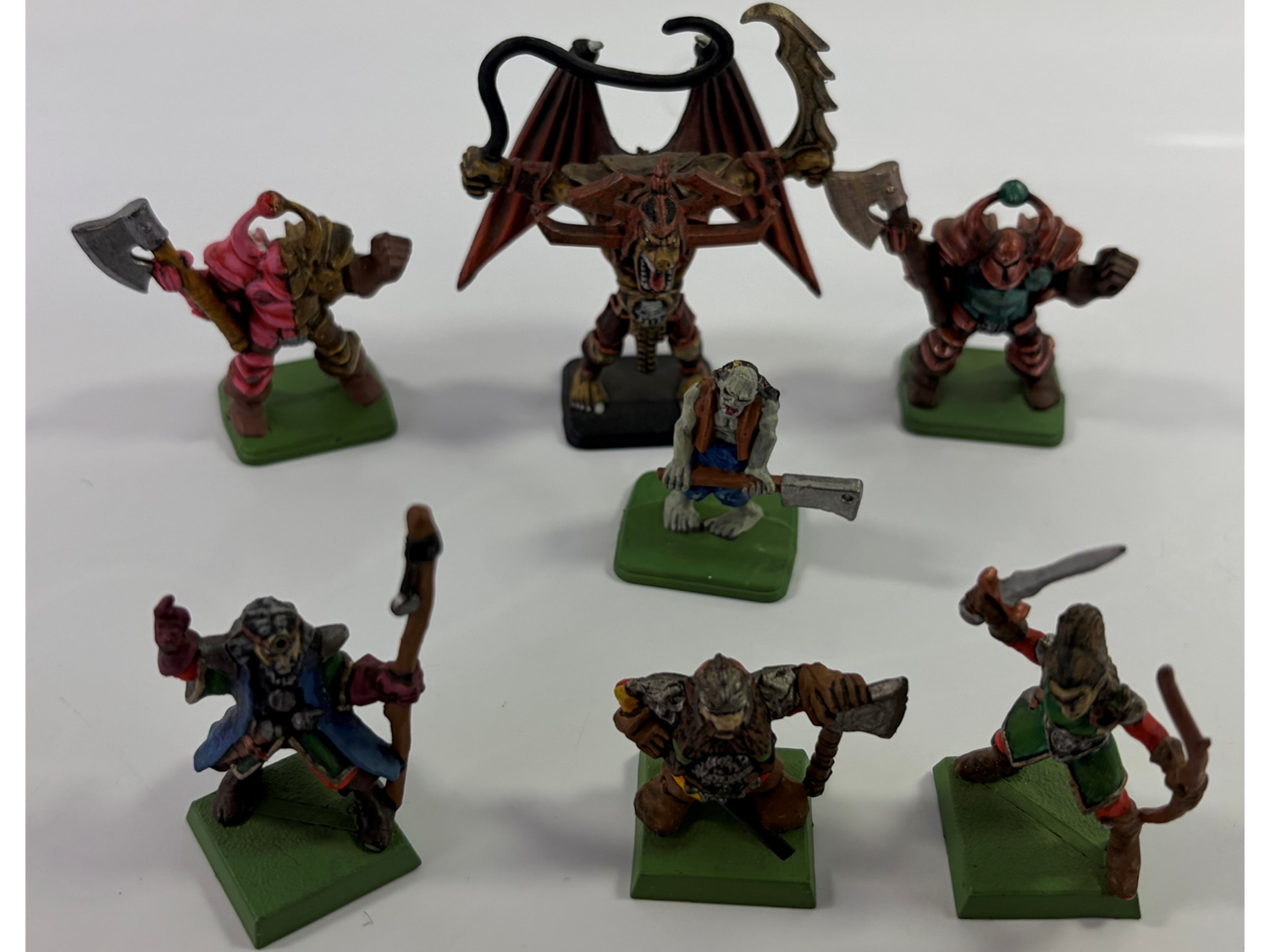
Many of these figures ended up joining Fantasy Battle armies – Dwarfs and Elves:
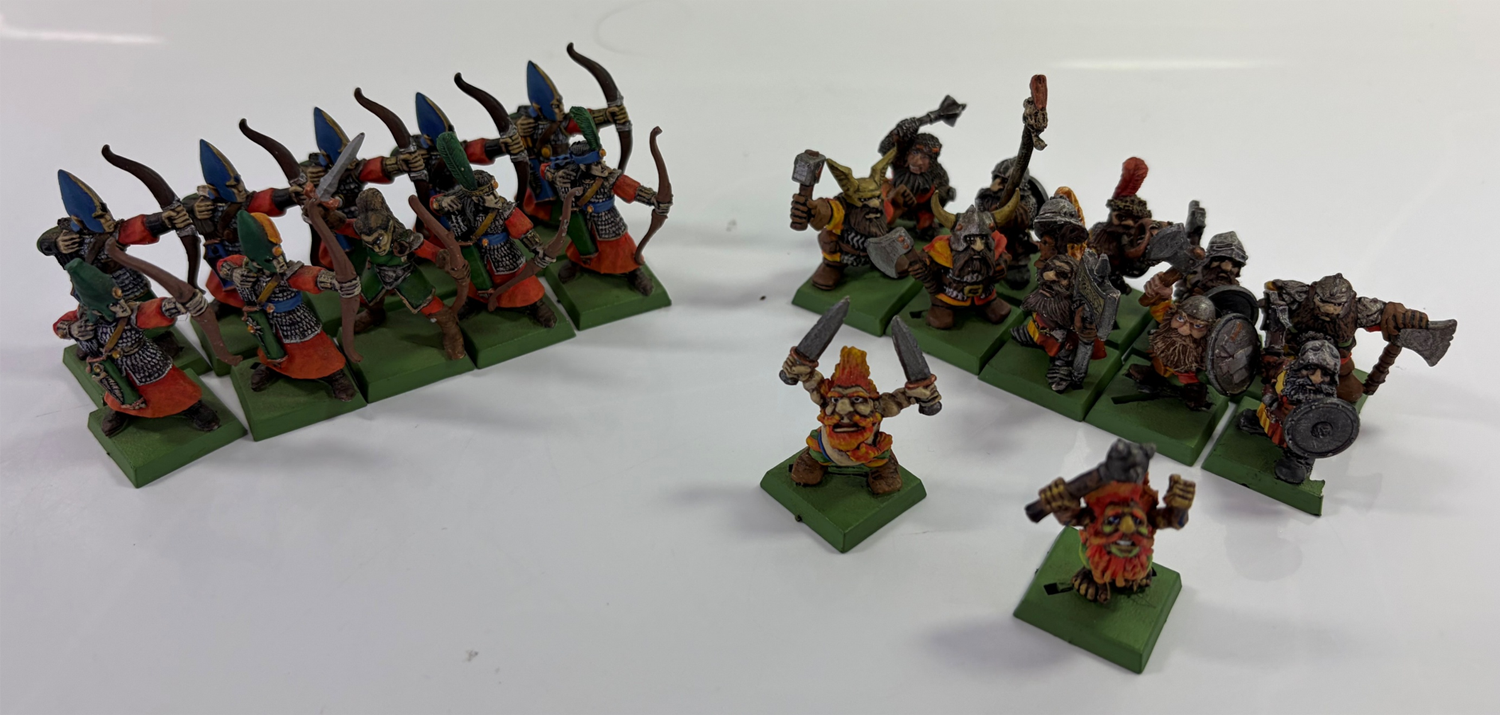
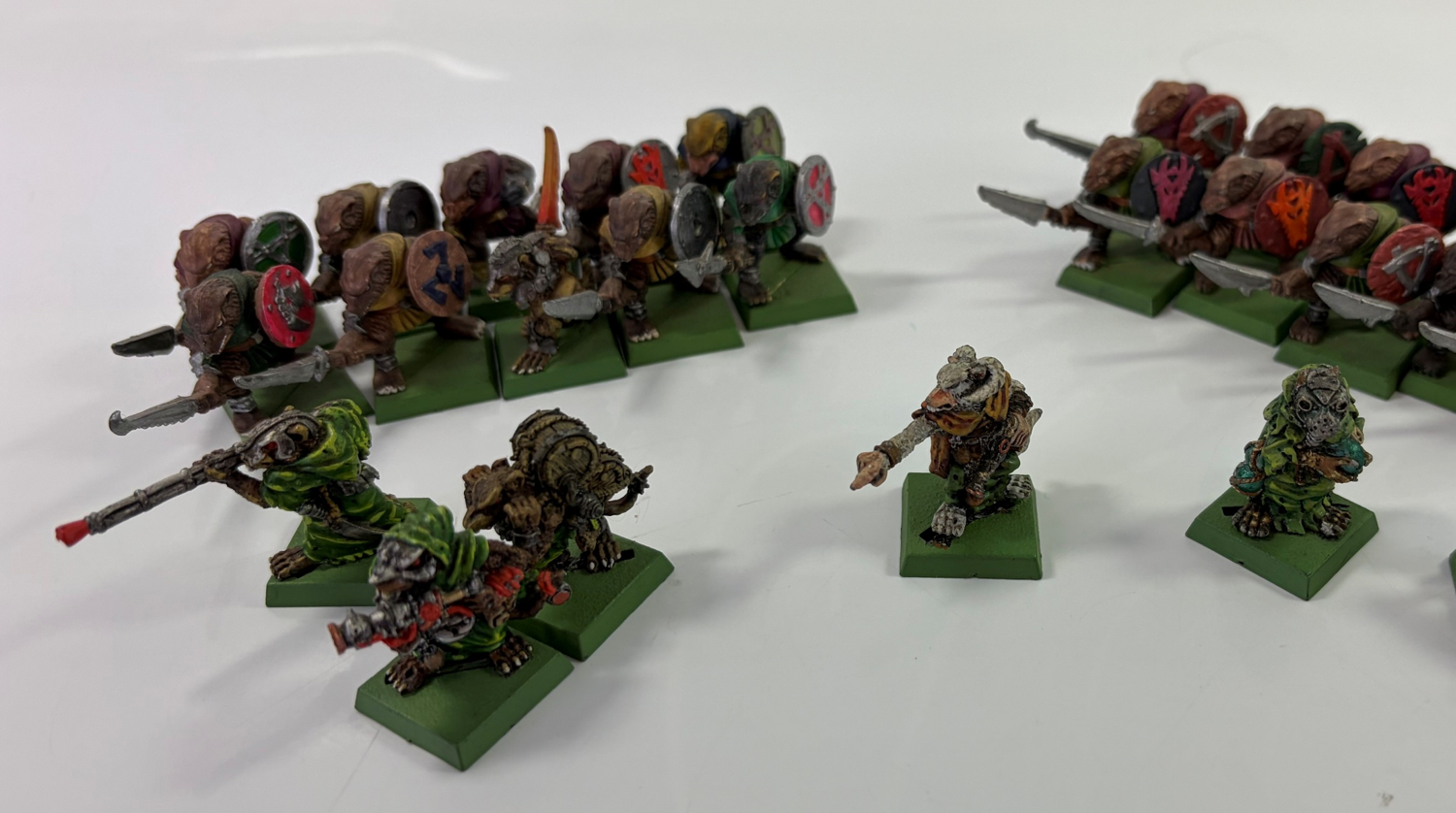
I still have most of the Skaven from Advanced Heroquest – I’m glad to see they are still a thing in Age of Sigmar!
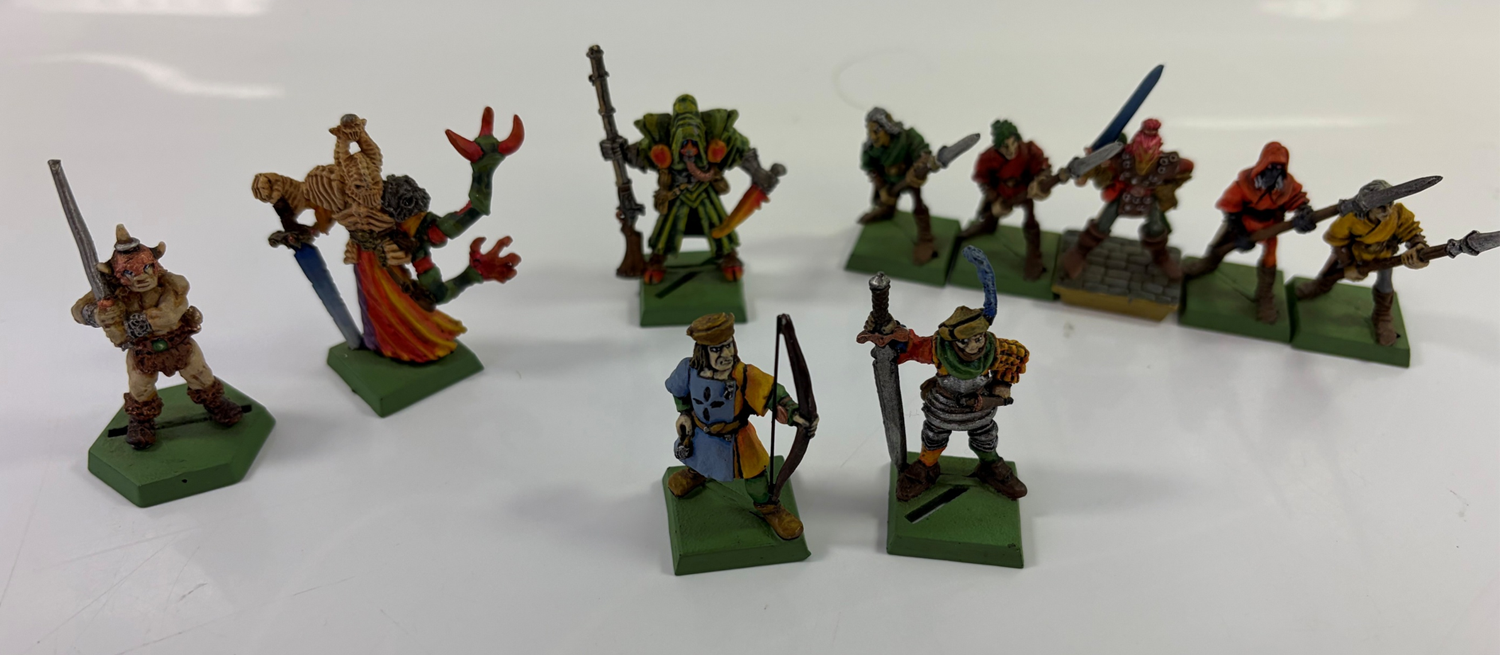
Whilst I built up armies, I would still model and paint pretty much anything, regardless of whether I had a use for it or not.. and yes, that is a Genestealer arm on the Chaos warrior middle left…
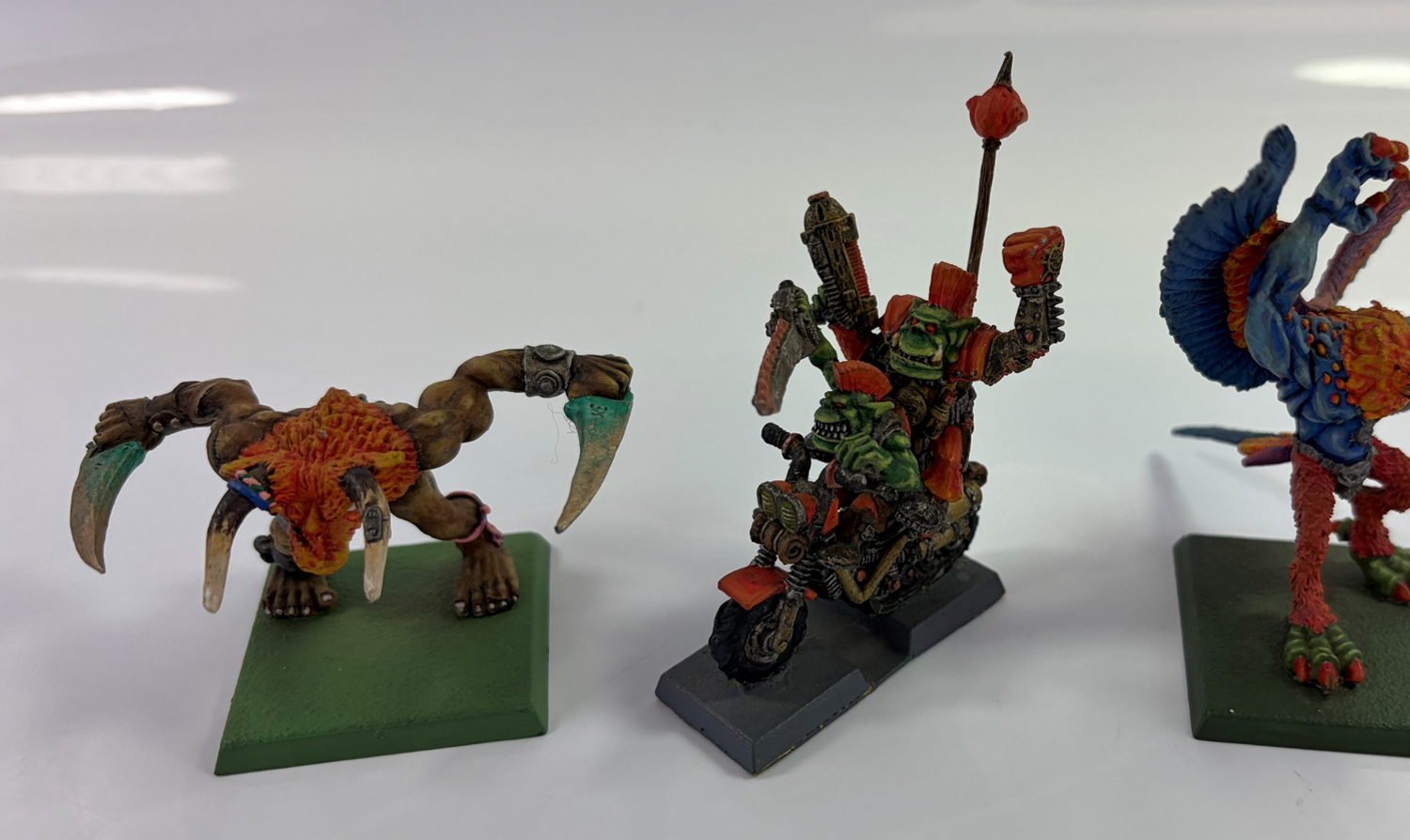
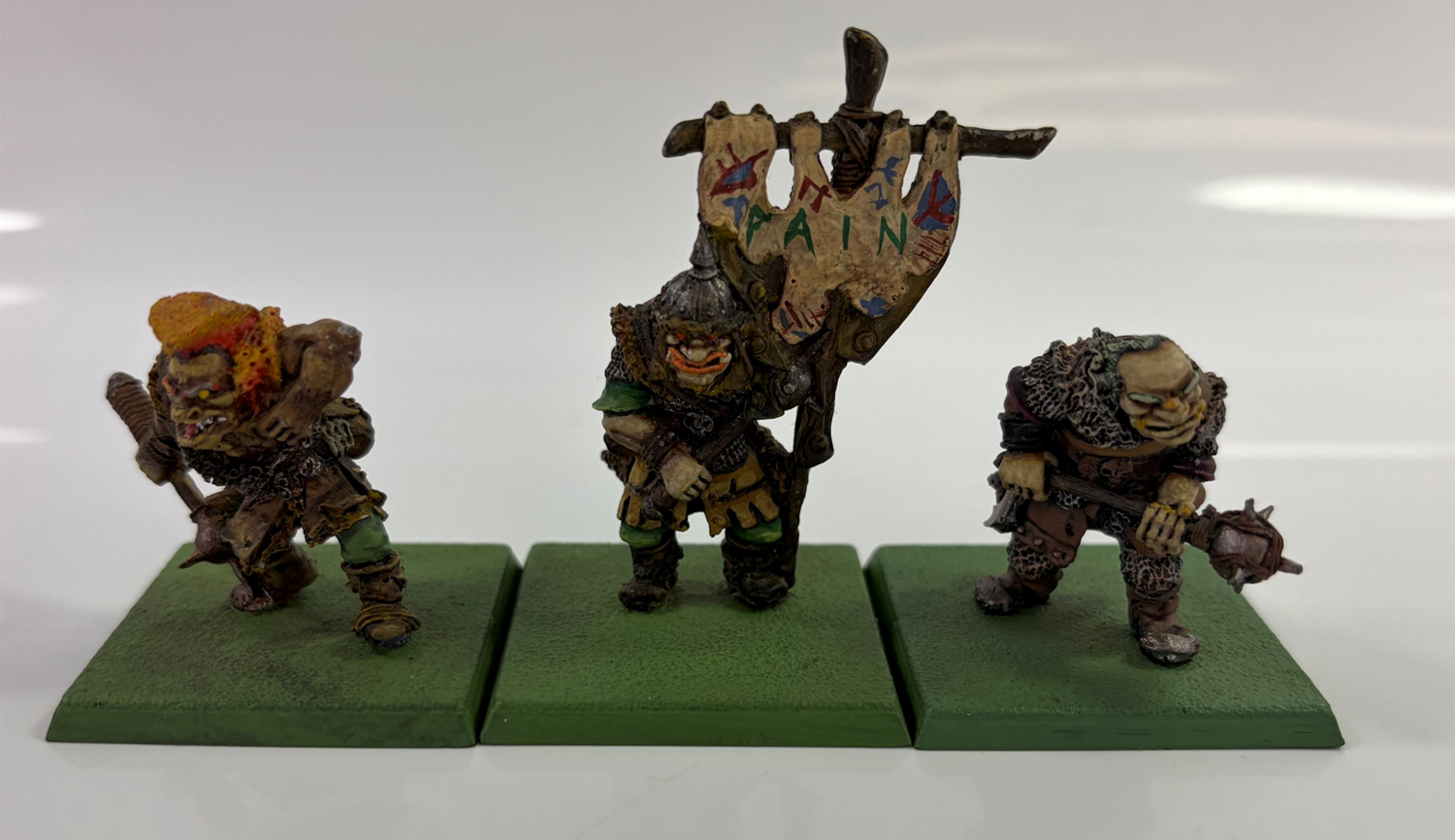
Back then, most plastic figures were limited to games themselves, or to bulk sets intended to quickly build armies – larger figures or characters were almost always made of white metal, all of these are weighty individuals:
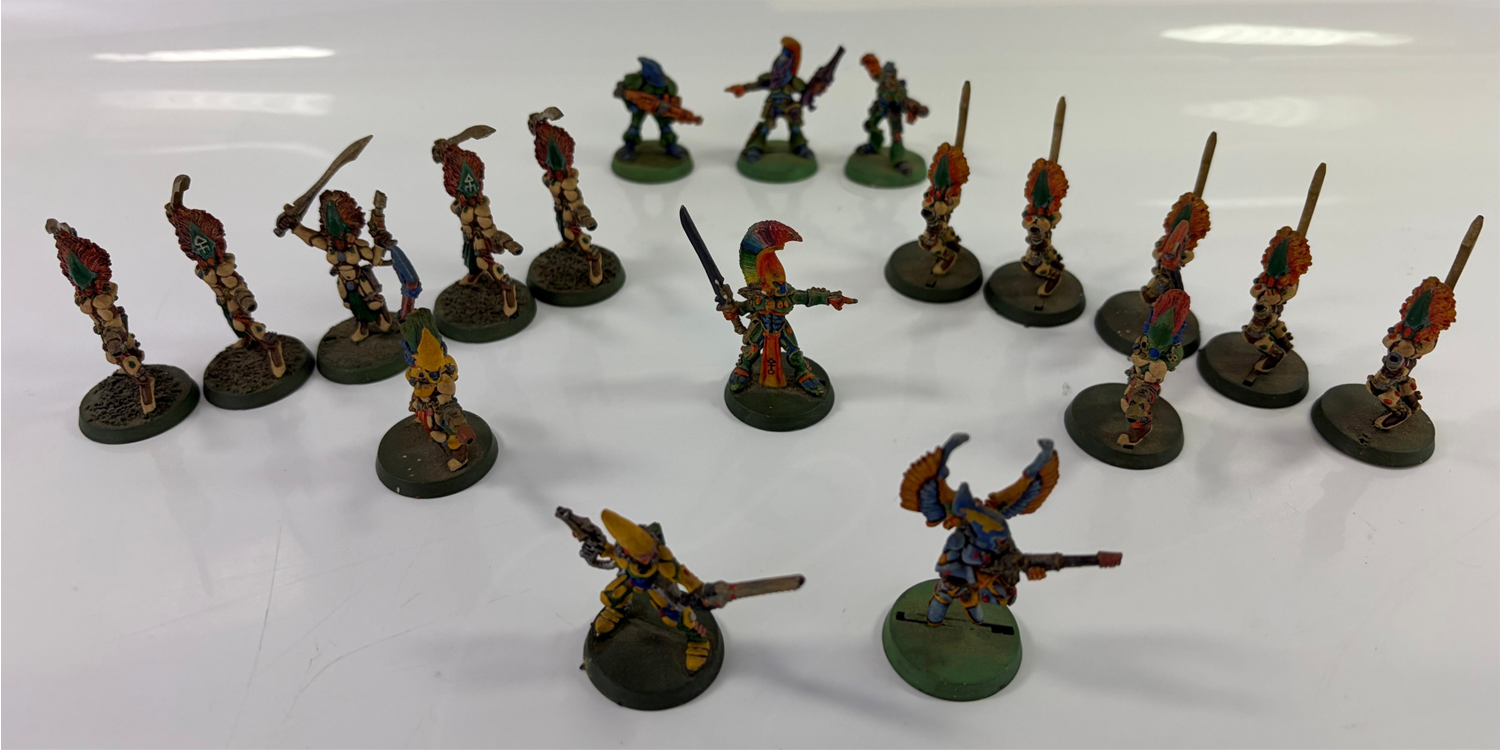
Playing 40k, my friends had chosen Marines and Orks as their faction of choice, I ended up choosing Eldar – most of the Guardians have long gone, but I have plenty of aspect warriors left:
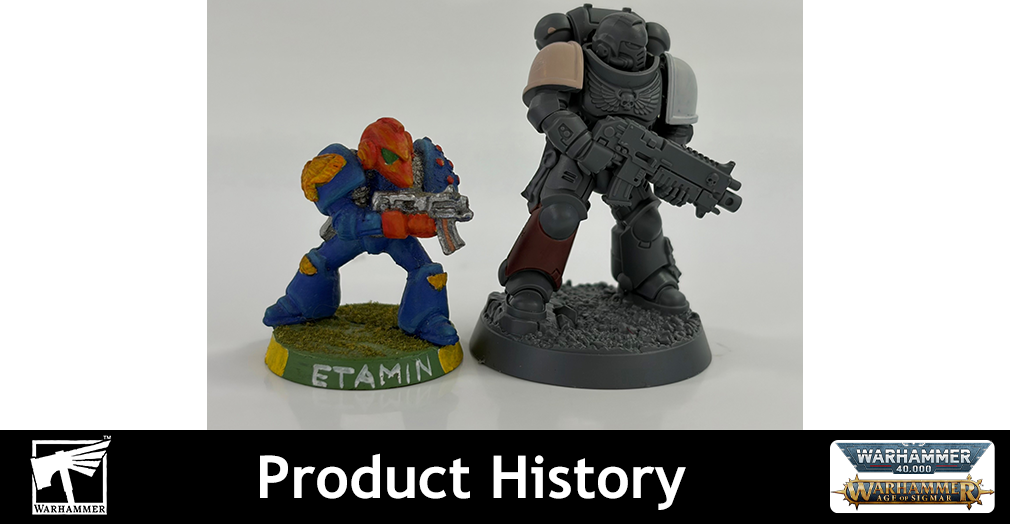
So what has changed in the time I was away? Naturally all of the miniatures are plastic now, as it is far more kid-friendly. Previously the most detailed figures were made of white metal, with some plastic add-on parts in some cases. Since then, moulding capabilities have come on tremendously, and plastic figures are the norm across the whole range – they have also got bigger which allows more detail on each figure. Take a look at a 1990s Space Marine next to a current one, nearly twice the size!
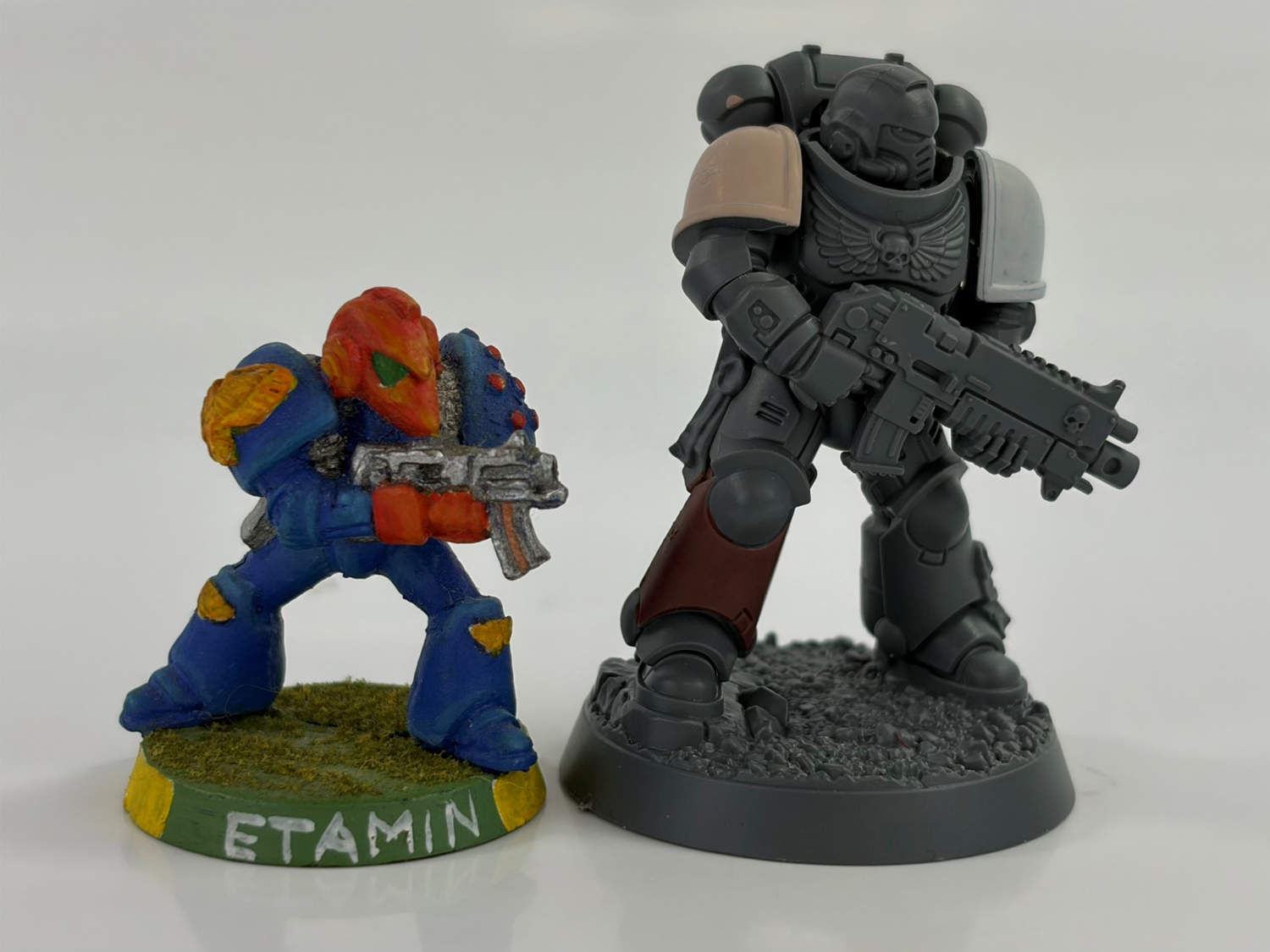
There is substantially more detail on the new figure and it is a lot crisper and more defined as well, making them much easier to get better painting results. A good thing as my eyesight isn’t as good as it once was. Progress!
So how about paints? When I first started we only had one type of paint, and after a few years in the hobby “inks” arrived in the “expert paint set” which were a revelation as they made quick shading much easier, great for mass painting armies quickly. Coming back and looking at the new paints, it was confusing what all these new types were:
In the past we had to do all of this ourselves, thinning and mixing until we got what we wanted. It could be difficult to get consistent results across multiple painting sessions and an entire army.
So I dove in and tried out the new range. Base and layer do what you would expect, base colours are great for a solid undercoat, and layers are for building up highlights on that base coat. Shade paints are an improved version of the old inks, and make deepening colours in lower areas and recesses much easier. So what of the “contrast” paints? I did some reading online and in some cases heard contrast paints described as “almost cheating” – having used a good few of them now, I’d agree with that, but it is great!
They behave like the thinner ink or shade paints, but with more pigment so they will still show colour on raised areas as well. Previously when painting Ork flesh, I would have to undercoat, then base coat, then shade, then highlight.
With the shade paints, I’ve been using a pale undercoat followed by the Ork flesh contrast:
With just one coat over the undercoat, this does the base colour and the shading all at the same time. This is incredible for mass painting armies, and for the “show off” models like bosses and character figures where you want to paint to a higher standard, all you need to follow up with is highlights using the layer paints. This is a great thing as it means people can get the bulk of an army painted up to a good standard much more consistently – it really helps keep the confidence up and helps you make satisfying progress.
The dry paints are great as well – whilst we could always drybrush using the old paints, these task specific paints are really well designed for it and just work better somehow. They are much more controllable, especially when using the dedicated dry brushes that are available. The convention used to be that you would use old and knackered brushes to drybrush, but these would often look like they had been dragged through a hedge backwards and so it could be difficult to keep things tidy on the model with bristles all over the place. The new dry brushes are a flat style brush but with shorter bristles, and are much better for being precise and rough at the same time. It’s really pleasing to see just how much thought has gone into this!
Here we have the first figures I painted on my new voyage – some Stormcast Eternals:
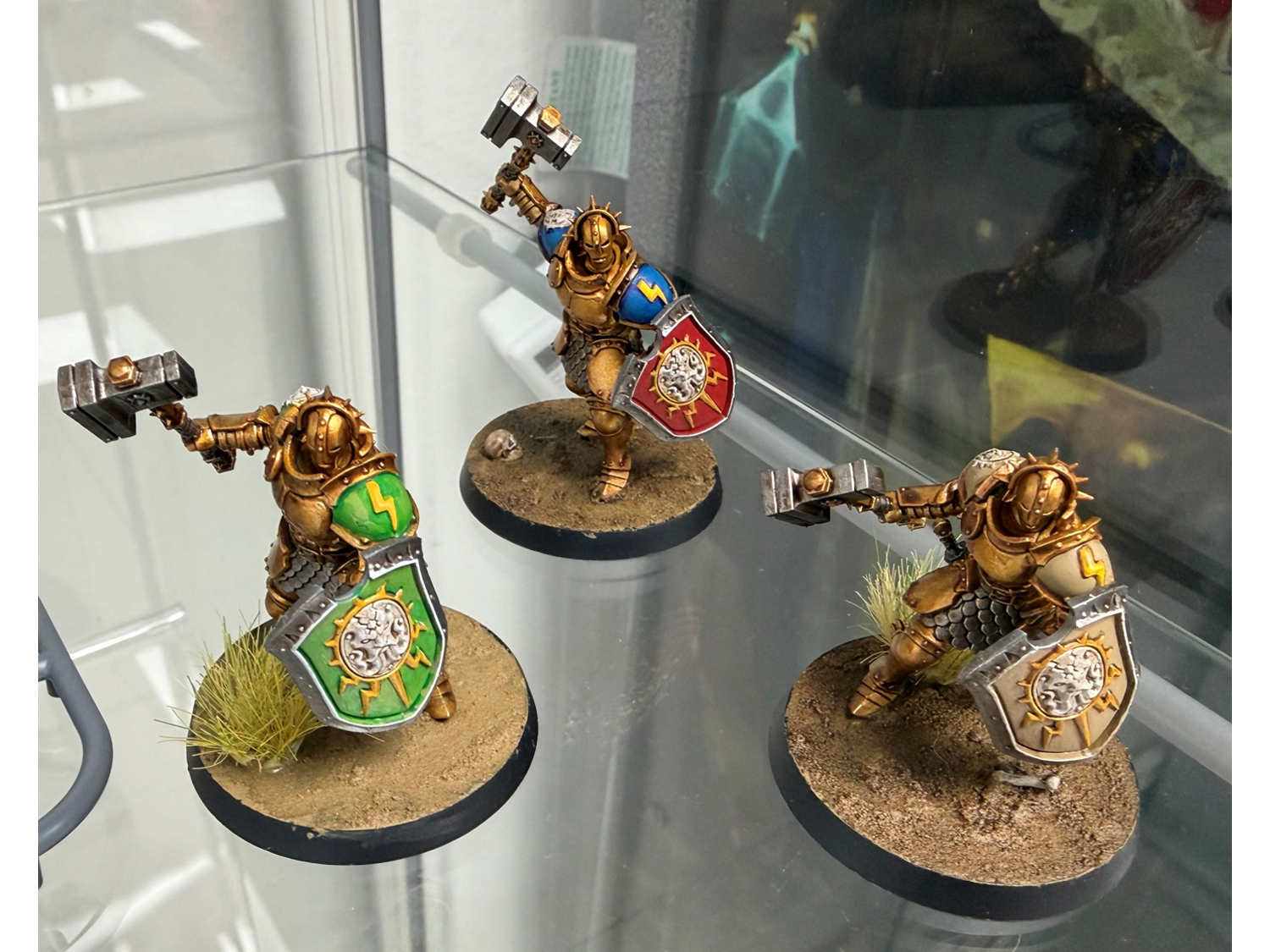
Whilst they need a touch up here and there, I’m happy with these as rank - and - file models. The gold armour is accented by the wash of Agrax Earthshade rather nicely! The detail on the figures is easy to work with.
The bases are painted with a texture paint, again washed with Agrax Earthshade, with some grass tufts added.
I then moved on to some 40K Orks:
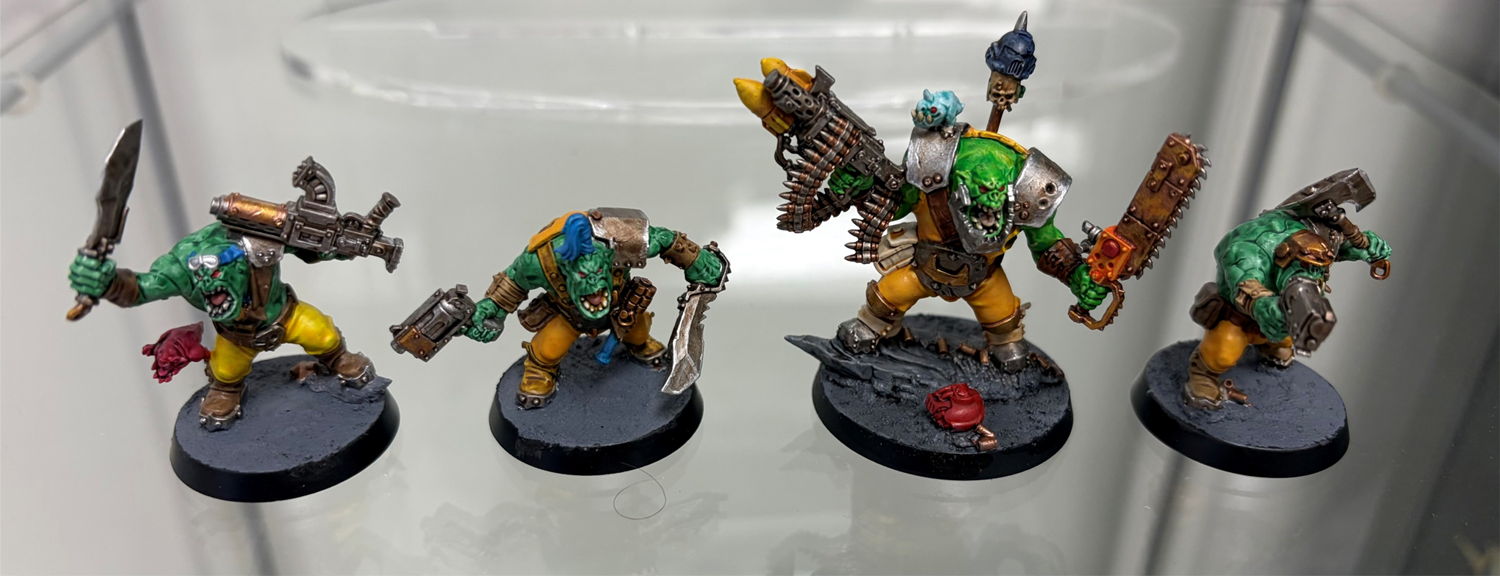
The skin on these has been done using the Ork Flesh contrast paint for quick results. I always like to have some colour variation on models even if they are the same unit, so you can see here that the yellow on the left hand model is a little brighter – this was done using yellow contrast paint over the undercoat, followed by orange shade paint. The yellow on the others was done more conventionally, using Averland Sunset as a base, followed by Flash Gitz yellow as a layer, then a thin wash of the Agrax Earthshade again.
You’ll also notice that the Boss, right of centre has a different skin tone – humans aren’t all the same colour so why should orks be? The Boss skin is a combination of two of the contrast paints – with a lighter, yellower green underneath the Ork Flesh. This has given a much richer tone. Metal areas use a darker base colour, brighter highlights, and then a wash of the Agrax Earthshade yet again. The Pet Squig on the shoulder pad is Aethermatic blue contrast paint over the white undercoat, with teeth and eyes done later.
The modern developments have meant I’ve found painting again an absolute joy, everything just seems better thought out and produced now. The modern figures, paints and tools are much nicer and easier to use, and we also have the benefit of things that were unthinkable back in the 90s – the Warhammer Paint app is recommended, it is free and has demonstrations for just about any colour. Just select the colour you are aiming for and it will suggest paints to use for both battle ready figures, and parade ready for your character models.
I’ve really been enjoying painting again, if you have been wondering if now is a good time to get back into the hobby or to start fresh, yes – do it!
You can view the full Warhammer range on our website through the button below.